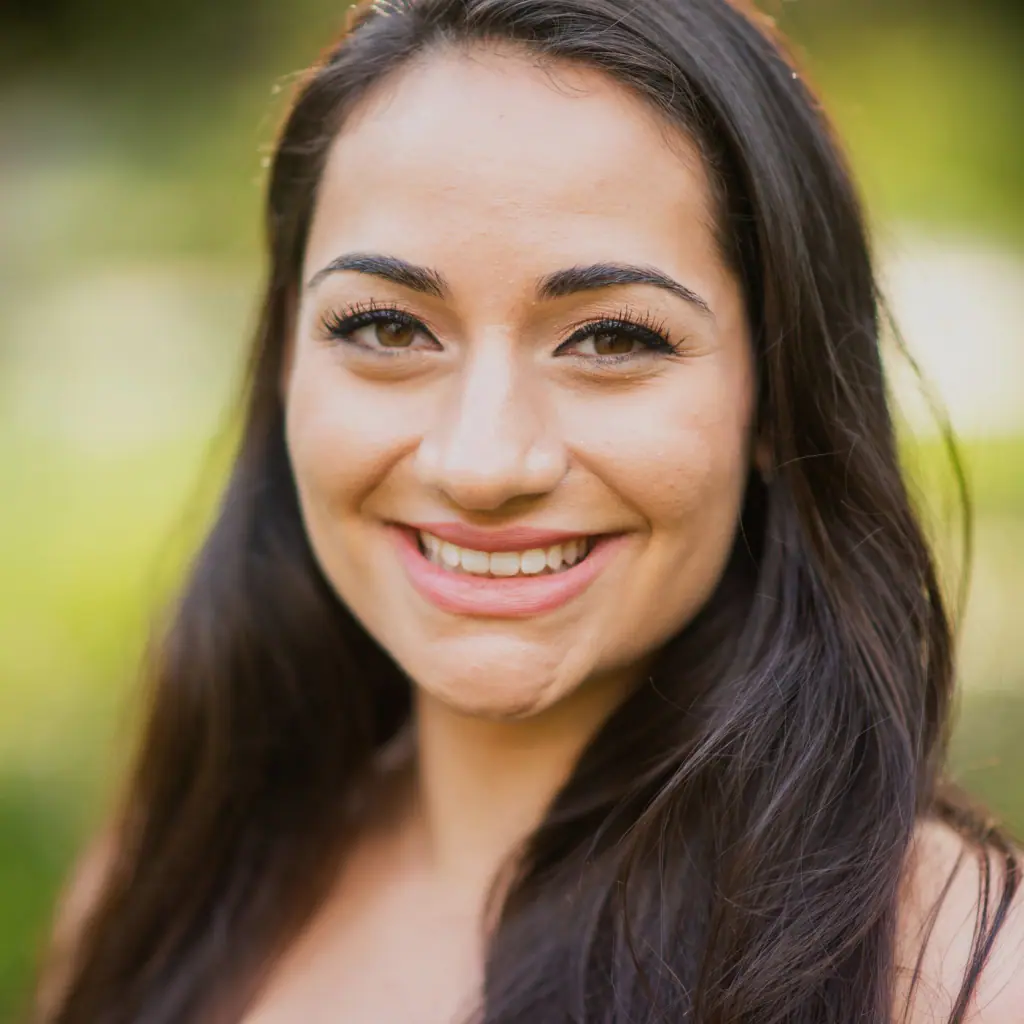
Malvika Tejura, Ph.D.
I earned my PhD in Genome Sciences from the University of Washington, where I served as a scientific leader within the IGVF consortium's Coding Variants Focus Group (CVFG). I led large-scale efforts to integrate high throughput functional assay data with computational prediction models to advance clinical variant interpretation. My work focused on building scalable, reproducible frameworks for resolving variants of uncertain significance.
Through this work, I developed deep expertise in model evaluation under real-world uncertainty, aligning predictive outputs with domain-grounded truth sets, and constructing data pipelines capable of operating at scale. I am now seeking AI/ML roles in healthcare and biological safety, where I can apply this experience to develop robust, interpretable systems that are reliable in high-impact clinical and scientific settings.
Education
University of Washington, Seattle
Ph.D., Genome Sciences • Jan, 2026
University of California, Berkeley
B.A., Molecular and Cell Biology • Jun, 2018
Experience
Genome Sciences Department, University of Washington, Seattle
Ph.D. Candidate, Fowler and Starita Labs • Sept, 2021 — Present
Evaluated and benchmarked machine learning models (EVE, REVEL, AlphaMissense, SIFT) for variant pathogenicity prediction, assessing model performance and calibration for clinical variant interpretation. Developed scalable pipelines to integrate functional assay data and predictive scores from MLMs (REVEL, AlphaMissense, MutPred2) for variant classification models.
Integrated large-scale genomic and functional datasets with machine learning model outputs to improve classification of variants of uncertain significance.
Skills developed - Advanced proficiency in Python and R for data analysis and visualization; experience with model evaluation, data preprocessing, and feature integration for ML applications in genomics; strong domain expertise in clinical genetics and variant effect modeling.
Handshake AI
MOVE Fellow, Biology Expert • Sept, 2025 — Present
Evaluated LLM reasoning and factual reliability in biology through systematic red teaming and model-failure analysis. Created adversarial and diagnostic prompts that revealed weaknesses in model understanding of biological concepts.
Skills developed - Experience in red teaming and adversarial prompt generation to assess LLM safety and reasoning performance. Improved ability to diagnose model failure modes, interpret outputs, and communicate domain-specific weaknesses. Gained insight into AI safety evaluation frameworks and model reliability for biological knowledge domains.
Maze Therapeutics
Senior Research Associate, Functional Genomics • Nov, 2020 — Jul, 2021
Engineered CRISPR-based gene perturbation systems in iPSCs, including stable Cas9, CRISPRi (dCas9-KRAB), CRISPRa (dCas9-VP64), and degron-inducible activation platforms, enabling precise and tunable control of gene expression. Built and deployed lentiviral constructs to support pooled CRISPR screens, and validated perturbation efficiency using qPCR-based assays. Evaluated functional consequences of gene perturbations in neuronal models, quantifying neurite outgrowth and transcriptional changes to link genotype to phenotype.
Skills developed - qPCR design and analysis, flow cytometry, fluorescence microscopy, lentivirus production, molecular biology techniques
Ultima Genomics
Research Associate -> Senior Research Associate, Chemistry R&D • May, 2019 — Nov, 2021
Led efforts to identify and resolve nucleic acid–mediated solid core bead interactions that interfered with library amplification, improving assay robustness and reproducibility. Designed and optimized buffer conditions and reagent systems for stable ePCR performance, and leveraged fluorescence microscopy and flow cytometry to characterize bead behavior on patterned wafers.
Skills developed - Flow cytometry, fluorescence microscopy, buffer chemistry, library preparation, DNA amplification, qPCR.
University of California, San Francisco
Lab Assistant I -> Jr. Specialist, Cell and Tissue Biology at Dr. Stephen Floor's Lab • Jun, 2017 — May, 2019
Investigated the functional impact of recurrent mutations in the RNA helicase DDX3X across engineered and patient-derived systems. Generated and characterized mutant cell line models using CRISPR/Cas9, introducing disease-relevant point mutations and correcting variants in patient-derived iPSCs to enable direct comparison of wild-type and mutant neurogenesis. Assessed phenotypic consequences, including stress granule formation and translational effects, using imaging and molecular assays. Earlier work focused on constructing plasmid-based reporter systems to study DDX3X-mediated resolution of 5'UTR secondary structures and its role in translation initiation.
Skills developed - CRISPR/Cas9 system optimization, designing sgRNAs, HDR templates, and primers, nucleofection techniques, cell culture work with N2A cells and iPSCs, western blots, ribosome profiling, immunofluorescence microscopy, FACS, RT-PCR, Gibson assembly, bacterial transformation, cell transfection, 5'RLM RACE.
Publications
A scalable approach to resolving variants of uncertain significance
Tejura M, Chen Y, McEwen AE, Stewart R, Sverchkov Y, Laval F, et al • Feb 14, 2026
bioRxiv • PMID 41727046 • PMCID PMC12918978
An integrated, scaled approach to resolve TSC2 variants of uncertain significance
Biar CG, Wang ZR, Camp ND, Holmes DL, Wheelock MK, Pendyala S, McGee AV, Gupta P, McEwen AE, Tejura M, et al • Jan 16, 2026
bioRxiv • PMID 41648336 • PMCID PMC12871146
MaveMD: A functional data resource for genomic medicine
McEwen AE, Stone J, Tejura M, Gupta P, Capodanno BJ, Da EY, et al • Nov 15, 2025
bioRxiv • PMID 41332838 • PMCID PMC12668102
Saturation genome editing of BARD1 resolves VUS and provides insight into BRCA1-BARD1 tumor suppression
Woo I, Casadei S, Snyder MW, Smith NT, Best S, Tejura M, et al • Nov 3, 2025
bioRxiv • PMID 41282735 • PMCID PMC12637766
Multiplexed assays of variant effect for clinical variant interpretation
McEwen AE, Tejura M, Fayer S, Starita LM, Fowler DM • Jul 21, 2025
Nature Reviews Genetics • PMID 40691352
Gene-based calibration of high-throughput functional assays for clinical variant classification
Zeiberg D, Stewart R, Jain S, Tejura M, McEwen AE, Fayer S, et al • Apr 29, 2025
bioRxiv • PMID 40654914
Calibration of variant effect predictors on genome-wide data masks heterogeneous performance across genes
Tejura M, Fayer S, McEwen AE, Flynn J, Starita LM, Fowler DM • Sept 5, 2024
American Journal of Human Genetics (AJHG) • PMID 39173626 • PMCID PMC11393694.
DDX3 depletion represses translation of mRNAs with complex 5' UTRs
Calviello L, Venkataramanan S, Rogowski KJ, Wyler E, Wilkins K, Tejura M, Thai B, Krol J, Filipowicz W, Landthaler M, Floor SN • May 21, 2021
Nucleic Acids Research • PMID 33905506 • PMCID PMC8136831.
Presentations
The Atlas at ~1%: Leveraging ~270,000 variant effect measurements in 41 disease genes to resolve VUS • Poster presentation
Tejura, M., & IGVF Coding Variant Focus Group
Mutational Scanning Symposium, Barcelona, Spain. • May 22, 2025
Reassessing the calibration of variant effect predictors for clinical interpretation • Seminar presentation
Tejura, M., & Fayer, S.
Variant Effect Seminar Series, University of Washington, Seattle, WA, United States. • Mar 4, 2025
New tools for assessing variant function for clinical applications AGMR Conference • Conference presentation
Tejura, M.
NIH, Washington, DC, United States. • Feb 27, 2025
Resolving uncertainty: Leveraging experimental and computational variant effect data for clinical variant reclassification • Poster presentation
Tejura, M., & IGVF Coding Variant Focus Group
IGVF Conference, Seattle, WA, United States. • Sept 24, 2024
Translating lab data to clinical insights: A focus on clinical variant interpretation • Conference presentation
Tejura, M.
Careers in Genome Sciences Symposium, Seattle, WA, United States. • May 21, 2024
Leveraging well-calibrated functional data and computational predictions to resolve variants of uncertain significance. AGBT Precision Health Conference, San Diego, CA. • Poster presentation
Tejura, M., Fayer, S., McEwen, A., Fowler, D. M., & Starita, L. M.
AGBT Precision Health Conference, San Diego, CA, United States. • Sept 8, 2023
Formal Teaching
University of Washington, Seattle
Guest Lecture: Interpreting Variants • Jun 4, 2025
Invited to present a guest lecture to undergraduate students in GENOME 373 (Analysis of Large-Scale Genetic Data) on methods for interpreting genetic variants.
University of Washington, Seattle
Teaching Assistant for Genome 373: Fundamentals of Genetics and Genomics • Mar, 2025 — Jun, 2025
Examines computational methods for analyzing large-scale genetic data, with applications to biological questions such as sequence alignment, gene prediction, phylogenetic inference, and microarray analysis.
University of Washington, Seattle
Teaching Assistant for Genome 361: Fundamentals of Genetics and Genomics • Jan, 2024 — Mar, 2024
Provides an introduction to core principles of genetics and genomics, emphasizing inheritance mechanisms, patterns of genetic variation, and the relationship between genotype and phenotype.
Informal Teaching
Shoreline Community College
Guest Lecturer • Mar, 2023
As a leader for the DEI committee initiative to increase Genome Sciences affiliations with community colleges in the area, I coordinated and gave a guest lecture on Next-generation sequencing to a biotechnology class at Shoreline CC with two other graduate students. After the lecture, there was a Q&A session where students could ask about general research, my path to graduate school, or opportunities for research at Genome Sciences.
University of Washington, Seattle
Genome Hackers Co-coordinator • Mar, 2022 — Dec, 2023
As co-coordinator of the Genome Hackers program at the University of Washington Genome Sciences program, I partook in coordinating and teaching a summer program geared to exposing high school students in underrepresented minorities to computational and hands-on techniques used in life sciences.
University of California, Berkeley
Tutor, Stem Cell Decal • Jan, 2017 — May, 2018
With my fellow facilitators, I taught a student-led stem cell biology class at UC Berkeley. The curriculum centered around biology, biotechnology, ethics, and policy surrounding stem cells. I gave weekly lectures, graded quizzes, and helped facilitate guest speakers.
De Anza Community College
Tutor, Math and Science Resource Center • Sept, 2015 — Jun, 2016
As a tutor at the De Anza College Math and Science Resource Center, I helped students understand the fundamentals concepts in Algebra, Chemistry, and Biology through drop-in tutoring and one on one settings.
Mentoring
University of California, Berkeley
MCB Transfer Mentor • Aug, 2017 — Dec, 2017
After reflecting on my challenging journey as a transfer, I joined the MCB (Molecular Cell Biology) Transfer Mentor Program at UC Berkeley, where I helped incoming transfers acclimate to the university and guided them on class selection. Specifically, I mentored Rio Marielle Malana, Dang Nguyen, and Joshua Moo Garcia. The Transfer Mentor Program consisted of weekly meetings with an MCB advisor, where I learned how to approach questions and concerns that could be posed by my mentees. I also had one-on-one check-ins with my mentees to learn more about their first-semester experience and support them in any challenges they might face. I continued my mentoring with some of my mentees beyond the program dates.
Community, Public Service, and Organizational Memberships
University of Washington, Seattle
Graduate Student representative: Genome Sciences DEI committee • Sept, 2022 — Jan, 2024
Passionate about creating and sustaining an impactful change in the scientific community, I joined the DEI committee in my department. My area of focus in this committee was to increase outreach with community colleges in the surrounding areas.
University of California, Berkeley
Member/Volunteer, Global Medical Training • Jan, 2017 — Jan, 2018
Global Medical Training is an organization that coordinates medical camps and medical donations for Central American countries. As a member of the GMT UC Berkeley chapter, I participated in a medical camp in the Dominican Republic, where I shadowed doctors and performed basic medical procedures for underprivileged groups in rural areas. As a GMT general member, I participated in workshops that educated others and myself on prevalent medical issues in developing countries.
Stanford Health Care
Volunteer • Sept, 2015 — Jun, 2016
As a volunteer for Stanford Health Care in the Ambulatory and Surgery Center, I helped patients check-in for surgery. Additionally, I communicated with family members in the waiting area about the status of the surgery and helped both patients and family members navigate the amenities that Stanford Health Care provided.
University of California, Davis
Volunteer, Pre-Health Conference • Aug, 2015 — Oct, 2015
As a volunteer for the nation's biggest Pre-Health Conference at UC Davis, I ensured that keynote speakers were on schedule for their presentations and coordinated their transport throughout their stay.
Additional Links
Social Links
- Github: https://github.com/mtejura
- LinkedIn: https://www.linkedin.com/in/malvika-tejura-9a2466133